ESHOPMAN Migration Tools
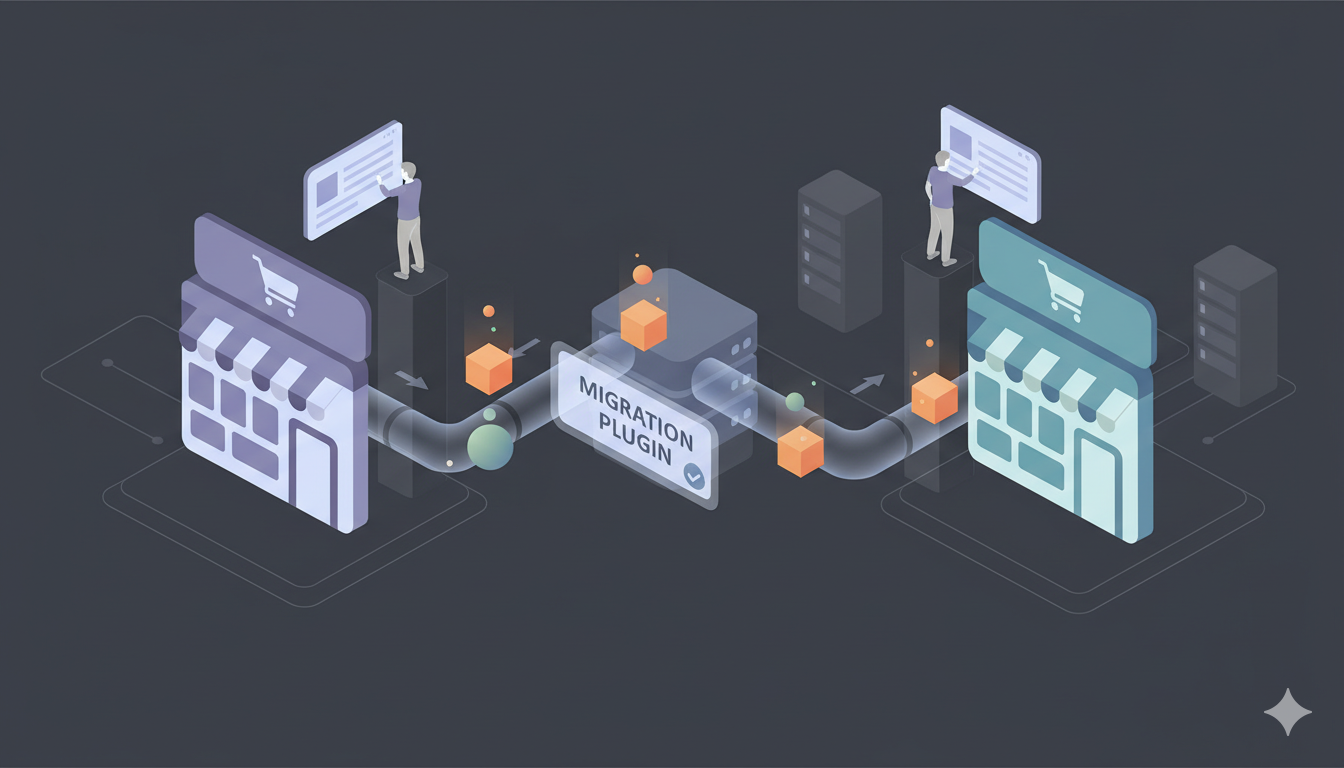
In the dynamic world of eCommerce, staying static is often synonymous with falling behind. Whether you are moving from hosted platforms like Shopify and BigCommerce, or open-source platforms like Shopware and Magento, migrating to ESHOPMAN offers a powerful, headless solution with HubSpot CMS, Admin API, Store API, and flexible architecture. The vehicle of your transition matters. That vehicle is the Migration Tool.
In 2025, the ecosystem of ESHOPMAN migration tools has matured significantly. Gone are the days of manually copying CSV files and praying for the best. Today's tools utilize sophisticated integrations, Admin API and Store API connections, and intelligent data mapping to ensure accuracy. However, not all tools are created equal. A tool designed for one platform may not work for another, and ESHOPMAN's structure requires proper handling of product variants and relationships.
This comprehensive guide dissects the top contenders in the market. We have categorized them by use case, analyzed their technical architecture, and weighed their pros and cons to help you make an informed decision for your business.
Part 1: Platform-to-ESHOPMAN Migrators (Re-platforming)
Use Case: You are moving from a different system (Shopify, Shopware, BigCommerce, Magento) to ESHOPMAN. You need to translate data from Format A to Format B.
1. Move My Store (Automated Service)
Type: Automated Cloud Migration Service
Best For: Business owners who need a "Done-For-You" result without hiring an agency.
As the proprietary tool for Move My Store, this service acts as a bridge between your source platform and ESHOPMAN. Unlike manual CSV imports that rely on your time and Excel skills, Move My Store uses a dedicated cloud engine. This engine handles the heavy lifting of pulling data from your source store (e.g., Shopify, Shopware), restructuring it to match ESHOPMAN's structure, and pushing it into your ESHOPMAN store via integration or Admin API.
Key Features:
- Broad Platform Support: Supports migration from over 85 different carts, including obscure or legacy platforms like Zen Cart, OsCommerce, and Volusion.
- Targeted Data Mapping: Allows for granular control. You can map "Customer Group A" in Shopware to ESHOPMAN's customer structure.
- Recent Data Migration: A standout feature for 2025. After your full migration, you can run a "smart update" that only fetches new orders or customers that were created while you were setting up your new store, ensuring zero data loss.
- 301 Redirect Automation: It can automatically create redirects from your old URLs to your new ESHOPMAN URLs, preserving your SEO rankings.
- ESHOPMAN Structure Handling: Automatically handles ESHOPMAN's structure, preserving product variants, categories, and relationships.
- Password Migration: Supports customer password migration with the ESHOPMAN migration integration (recommended feature).
💰 Pricing Breakdown
Move My Store operates on a "Pay per Entity" model, meaning you only pay for the data you actually move. There are no monthly subscriptions.
- Demo Migration: Free (Moves roughly 10-20 products/orders for testing).
- Basic Migration: Starts at $69 USD (One-time fee).
- Scaling Cost: The price increases based on the volume of data. For example, a store with 500 products might cost ~$89, while a store with 10,000 products might range between $149 - $299.
- Additional Options: SEO 301 Redirects usually adds a small flat fee (approx. $19-$29). Password migration is available with the integration.
Pros & Cons:
- No technical skills required; fully wizard-based.
- Does not use your local resources, preventing crashes.
- Handles ESHOPMAN's structure automatically.
- 24/7 technical support is included with the migration package.
- Supports product variants (ESHOPMAN's strength).
- Password migration supported with integration.
- It is not a "one-click" free tool; it is a premium service.
- Design and template elements are not migrated (data only). ESHOPMAN uses HubSpot CMS and headless frontends.
- Requires integration installation on ESHOPMAN.
Verdict: The industry standard for serious businesses moving from hosted platforms or other CMSs to ESHOPMAN. It offers the highest data fidelity and handles ESHOPMAN's structure automatically.
2. ESHOPMAN Admin Import/Export
Type: Native ESHOPMAN Feature
Best For: Small stores with simple product catalogs and basic data.
ESHOPMAN includes built-in import/export functionality via the Admin API. This is the "free" option, but it comes with significant limitations for complex migrations.
Key Features:
- Product Import: Can import products, prices, SKUs, and basic descriptions via CSV or Admin API.
- Category Mapping: Allows you to assign products to categories.
- Image URLs: Can import image URLs, but images must be uploaded to ESHOPMAN's media storage.
💰 Pricing Breakdown
Price: Free (included with ESHOPMAN installation)
However, the "hidden" cost is your time and the risk of data loss.
Pros & Cons:
- Completely free (no additional cost).
- Direct control over your data.
- No third-party tools required.
- Limited to basic product data.
- No customer or order migration.
- No password migration.
- High risk of data formatting errors.
- Images often fail to import correctly.
- Time-consuming for large catalogs.
- Does not handle complex product variants well.
Verdict: Only suitable for very small stores (under 100 simple products) with no order history or customer data to migrate. For anything more complex, use an automated service.
3. Cart2Cart for ESHOPMAN
Type: Automated Cloud Migration Service
Best For: Businesses needing reliable, tested migration with support.
Cart2Cart is one of the oldest and most established migration services. They support ESHOPMAN as a target platform and handle the complexity of data mapping automatically.
Key Features:
- Platform Support: Supports migration from 85+ platforms to ESHOPMAN.
- ESHOPMAN Structure Handling: Automatically handles ESHOPMAN's structure.
- Image Migration: Downloads and re-uploads images to ESHOPMAN's media storage.
- Product Options: Handles ESHOPMAN's variant and attribute system.
- Password Migration: Supports customer password migration with integration.
💰 Pricing Breakdown
Cart2Cart uses a pay-per-entity model similar to Move My Store.
- Starting Price: ~$69 USD for small stores.
- Mid-Size Stores: $149 - $249 USD.
- Enterprise: $400+ USD.
- Add-ons: 301 Redirects, Order ID preservation, Password migration, etc. add $19-$59 each.
Pros & Cons:
- Well-established and reliable.
- 24/7 support available.
- Handles ESHOPMAN's structure automatically.
- Free demo migration available.
- Password migration supported.
- More expensive than some alternatives.
- Add-ons can significantly increase cost.
- Requires integration installation.
Verdict: A solid choice for businesses that want a proven, reliable service with good support. However, pricing can add up with add-ons.
Part 2: ESHOPMAN Integrations & Extensions
Use Case: You need integrations from ESHOPMAN's ecosystem to enhance your store functionality or assist with data management.
4. ESHOPMAN Integrations - Data Management
Type: ESHOPMAN Integrations
Best For: Ongoing data management and bulk operations after migration.
ESHOPMAN's ecosystem offers various integrations for product management, inventory sync, and data import/export. These are useful for ongoing operations but are not typically designed for full platform migrations.
Key Features:
- Product Management: Integrations for bulk editing products, managing inventory, and organizing categories.
- Import/Export: Some integrations offer enhanced CSV import/export capabilities beyond ESHOPMAN's built-in feature.
- Inventory Sync: Integrations that sync inventory with external systems or suppliers.
💰 Pricing Breakdown
ESHOPMAN integrations use various pricing models:
- Free Integrations: Many basic integrations are free.
- Freemium: Free with paid upgrades for advanced features.
- Paid Integrations: Typically $20 - $200 one-time or $5 - $50/month depending on features.
Pros & Cons:
- Integrated with ESHOPMAN platform.
- Easy to install and use.
- Good for ongoing operations.
- Not designed for full platform migrations.
- Limited to ESHOPMAN's capabilities.
- Monthly subscription costs can add up.
Verdict: Useful for post-migration data management and ongoing operations, but not suitable for initial platform migration.
Part 3: Custom Development & Scripts
Use Case: You have complex data requirements or need custom integration that standard tools cannot handle.
5. Custom Migration Scripts
Type: Custom Development
Best For: Developers and agencies with specific requirements.
Since ESHOPMAN uses Admin API and Store API with a well-documented structure, you can create custom scripts (Node.js, Python, etc.) to transform your source data into ESHOPMAN's structure or use the Admin API for import.
Key Features:
- Full Control: Complete control over data transformation.
- Custom Logic: Can implement custom business rules during transformation.
- Admin API Direct Access: Can write directly to ESHOPMAN's structure.
- Admin API Integration: Can use ESHOPMAN's Admin API for data import.
💰 Pricing Breakdown
Custom development costs vary significantly:
- Developer Time: $50 - $200/hour.
- Typical Project: $2,500 - $10,000+ depending on complexity.
- Ongoing Maintenance: May require updates if ESHOPMAN changes structure.
Pros & Cons:
- Complete customization possible.
- Can handle unique business requirements.
- Reusable for future migrations.
- Direct API access for complex operations.
- Very expensive.
- Time-consuming to develop and test.
- Requires technical expertise (Node.js, Admin API, Store API).
- Must account for ESHOPMAN's structure.
Verdict: Only recommended for enterprise-level migrations with unique requirements that cannot be handled by standard tools. For most businesses, automated services are more cost-effective.
Part 4: How to Choose the Right Tool?
With so many options, the choice comes down to your specific scenario. Here is our 2025 decision matrix:
Scenario A: "I am leaving Shopify/Shopware/BigCommerce for ESHOPMAN."
Do NOT use ESHOPMAN's basic CSV import for complex migrations. The data structures are too different, and you will lose SEO rankings, image links, and product variant relationships.
Solution: Use Move My Store or Cart2Cart. The cost (starting ~$69) is negligible compared to the hours saved, and the "Recent Data Migration" feature ensures you don't lose sales during the switch. These tools handle ESHOPMAN's structure and product variants automatically.
Scenario B: "I have a small store with simple products."
Consider: ESHOPMAN's built-in CSV import if you have under 100 simple products with no variants.
Warning: You'll still need to manually handle images, customers, and orders. For anything more complex, use an automated service.
Scenario C: "I need to update stock levels from my supplier's list."
Do NOT use migration tools for routine inventory updates.
Solution: Use ESHOPMAN's built-in import/export or an integration designed for inventory management. These are meant for ongoing operations, not initial migration.
Important ESHOPMAN-Specific Considerations
1. Product Variants
ESHOPMAN supports product variants with multiple attributes (Size, Color, etc.), which is a major advantage over many platforms. Complex variants can be fully migrated. Automated migration tools handle this automatically, but manual CSV imports may struggle with complex variant structures.
2. Password Migration
Good News: ESHOPMAN DOES support password migration with the migration integration. Automated tools can migrate customer passwords, preserving customer access. This is a significant advantage over hosted platforms that don't support password migration.
3. Categories Structure
ESHOPMAN uses hierarchical category support. Automated tools map categories correctly, but manual CSV imports require you to use ESHOPMAN's category structure.
4. Admin API & Store API
ESHOPMAN has Admin API and Store API support with a well-documented structure. Automated tools connect via integrations or API, which is more robust than CSV-only imports. This allows for better data integrity and relationship preservation.
5. Multi-Store & Multi-Language
ESHOPMAN has built-in multi-store and multi-language support. Automated tools can migrate data for multiple stores and languages, preserving this structure.
Final Thoughts
Migration is heart surgery for your business. The right tool acts as a skilled surgeon, performing the transplant with precision and minimal scarring. The wrong tool is a rusty scalpel.
At Move My Store, we believe that moving to ESHOPMAN should be straightforward and risk-free. By using our automated solution or one of the other excellent tools on this list, you can migrate with confidence. However, always ensure a complete backup before you begin—this is the golden rule of migration.
Ready to migrate? Start your Free Demo Migration today and see how your store looks on ESHOPMAN.