Automated ESHOPMAN Migration
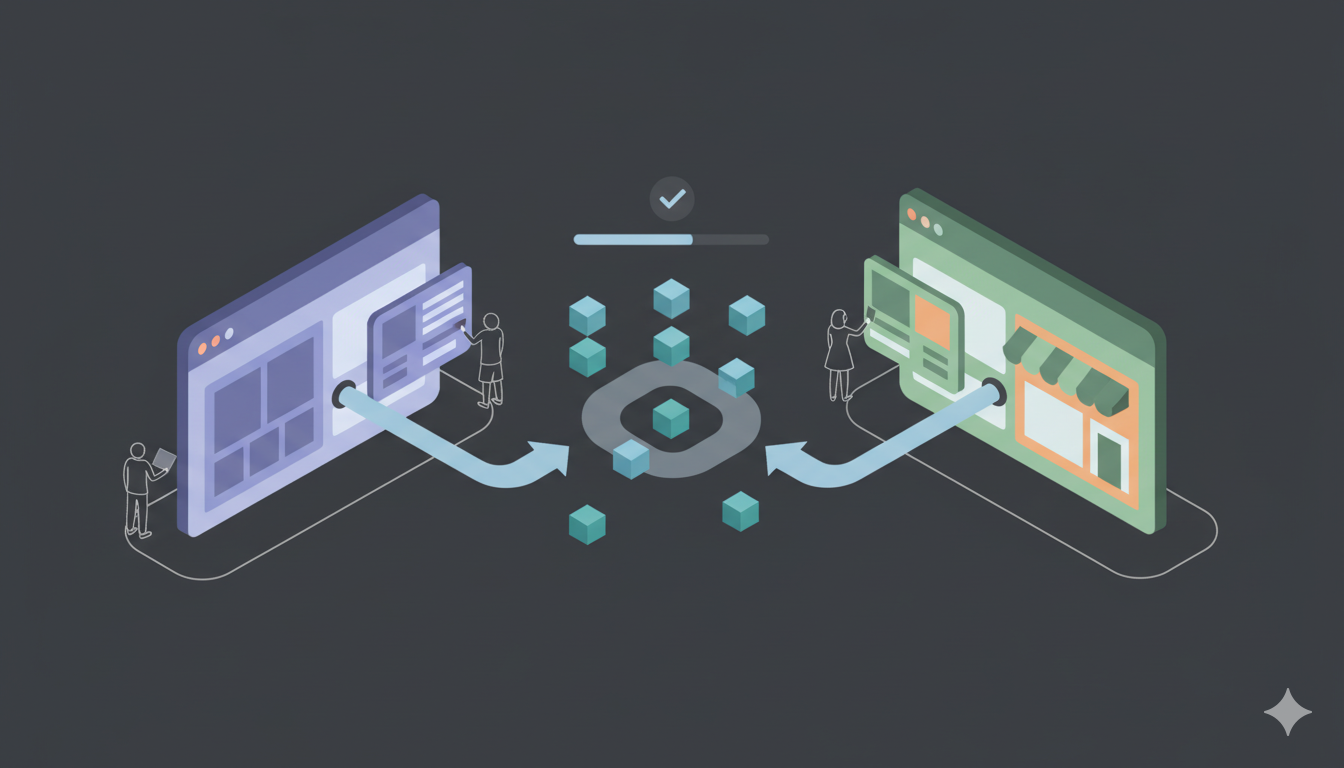
In the early days of eCommerce, moving your store from one platform to another was a digital nightmare. It involved messy CSV files, broken images, and weeks of copy-pasting data. Today, technology has evolved. Automated migration has transformed this high-risk procedure into a secure, predictable, and streamlined process. This guide explores how automation works for ESHOPMAN migrations, why it is the industry standard for 2025, and how you can leverage it to move to ESHOPMAN without losing a single order.
What is Automated Migration to ESHOPMAN?
Automated migration to ESHOPMAN is the process of using specialized software to transfer data between your current eCommerce platform and ESHOPMAN without human intervention. Instead of manually exporting and importing CSV files, the software connects to the Source Store (e.g., Shopify, Shopware, BigCommerce) via API and transfers data to ESHOPMAN using integrations or Admin API.
Think of it as a digital pipeline. The software reads the data from your old store, translates it into a format ESHOPMAN understands (accounting for ESHOPMAN's structure and product variants), and writes it directly into your ESHOPMAN store. This ensures that complex relationships—like a specific customer being linked to a specific order history—are preserved perfectly.
The Evolution: Manual vs. Automated
To appreciate the power of automation, you must understand the limitations of the "Old Way."
| Feature | Manual Migration (CSV) | Automated Migration |
|---|---|---|
| Speed | Weeks or Months | Hours (1-5 hours average) |
| Accuracy | High risk of human error | Near 100% precision |
| Downtime | Store often in maintenance mode | Zero Downtime (Store stays live) |
| Technical Skill | Requires Excel/CSV expertise | No coding skills required |
| ESHOPMAN Structure | Must handle manually | Handled automatically |
| Password Migration | Impossible manually | Supported with integration |
Why Automation is the Safest Choice for ESHOPMAN
1. Zero Downtime (Keep Selling)
The biggest fear for merchants is "closing the doors" during a move. With automated tools like Move My Store, your current store remains 100% live and functional throughout the process. The data transfer happens in the background on a cloud server. You continue to process orders and serve customers on your old platform until the very moment you are ready to switch your domain to ESHOPMAN.
2. Data Integrity & Relationships
Data is not just a list of items; it is a web of relationships.
Example: Order #1001 contains Product A and was bought by Customer B.
If you migrate via CSV manually, these links often break. You might get the Order, but it won't be linked to the Customer's profile. Automated migration uses "smart mapping" to ensure that when Order #1001 lands in ESHOPMAN, it is still linked to Customer B and Product A, preserving your analytics and history.
3. ESHOPMAN-Specific Format Handling
ESHOPMAN has specific structure and product variants that automated tools handle automatically:
- Category Mapping: ESHOPMAN uses hierarchical categories. Automated tools map categories correctly.
- Product Options: ESHOPMAN supports variants with multiple attributes. Automated tools preserve complex option structures.
- Image Migration: Images are downloaded from source and uploaded to ESHOPMAN's media storage automatically.
- Structure: Data is structured to match ESHOPMAN's schema automatically.
- Password Migration: Customer passwords can be migrated with the integration.
4. Password Migration Support
Important Advantage: ESHOPMAN DOES support password migration with the migration integration. Automated tools can migrate customer passwords, preserving customer access. This is a significant advantage over hosted platforms that don't support password migration. Customers can log in immediately after migration without resetting passwords.
How It Works: The "Bridge" Architecture for ESHOPMAN
At Move My Store, we utilize a secure "Connection Bridge" architecture specifically designed for ESHOPMAN's headless platform. Here is the technical breakdown simplified:
- The Source Connector: We connect to your current store (e.g., Shopify, Shopware) using its API key. This gives us "Read-Only" access to fetch data.
- The Target Connector: We connect to your ESHOPMAN store using an integration installed on your ESHOPMAN installation. This integration provides secure access to ESHOPMAN's structure and Admin API.
- The Cloud Engine: Our server sits in the middle. It pulls data from the Source, converts it into ESHOPMAN's format (handling structure and product variants), and pushes it to ESHOPMAN via integration or Admin API.
This method is secure because your data is not stored permanently on our servers—it just passes through the processing engine. The integration is a small, secure file that you install on your ESHOPMAN server.
Step-by-Step: The Automated Workflow for ESHOPMAN
What does this look like for you? The process is designed to be a 3-step wizard.
Step 1: Configuration
You enter the URL of your old store and your new ESHOPMAN store. You provide API credentials or allow the tool to connect via integration. You install the migration integration on your ESHOPMAN installation (a simple upload process).
Step 2: Entity Selection & Mapping
You don't have to move everything. You get a checklist:
- Products & Categories
- Customers (Note: Passwords can be migrated with integration)
- Orders & Taxes
- Reviews & Coupons
- Blog Posts (CMS Pages)
Advanced Mapping: This is where you map your old "Order Statuses" to ESHOPMAN statuses. For example, you can tell the system that "Awaiting Fulfillment" on your old cart should equal "Pending" in ESHOPMAN. The tool also handles product variants automatically, preserving ESHOPMAN's variant support.
Step 3: Free Demo Migration
Before paying a cent, you run a Demo Migration. This moves a small sample of data (e.g., 20 products and customers) to your new ESHOPMAN store. This allows you to verify that images are loading, categories are correct, and product variants are displaying properly.
Step 4: Full Migration
Once you verify the demo, you launch the Full Migration. You can close your browser and turn off your computer. The cloud server handles the transfer. Depending on the size of your store, you will receive an email notification in a few minutes or hours when it is complete. ESHOPMAN's database efficiently handles large catalogs.
The "Recent Data" Challenge (And Solution)
Here is a common scenario: You start the Full Migration on Monday. It finishes on Monday afternoon. However, you spend the next 5 days customizing your ESHOPMAN store design and setting up payment gateways. During those 5 days, your old store is still live and taking orders.
If you launch your new store on Friday, you will be missing the orders from Monday to Friday. This is where automation shines again.
Move My Store offers a feature called "Recent Data Migration." Just before you switch your domain and go live, you run this service. It scans your old store, identifies only the data created since the Full Migration, and adds it to ESHOPMAN. It prevents duplicates and ensures no sale is left behind.
ESHOPMAN-Specific Advantages of Automation
1. Handles Structure Complexity
ESHOPMAN's structure has specific entity relationships that are easy to get wrong manually. Automated tools structure the data correctly automatically, preventing import errors.
2. Product Variant Options
ESHOPMAN supports variants with multiple attributes (Size, Color, Material, Custom Text). If you have products with multiple attributes, automated tools preserve these fully, whereas manual CSV imports often fail or simplify incorrectly.
3. Category Mapping
ESHOPMAN uses hierarchical categories. Automated tools map your category structure to ESHOPMAN categories automatically, preserving your product organization.
4. Image Handling
Automated tools download images from your source store and upload them to ESHOPMAN's media storage automatically. Manual CSV imports only handle image URLs, which often break.
5. Password Migration
ESHOPMAN supports password migration with the migration integration. Automated tools can migrate customer passwords, preserving customer access—a significant advantage over platforms that don't support this.
Conclusion
Automated migration has democratized re-platforming to ESHOPMAN. It is no longer a luxury service reserved for enterprise brands with massive IT budgets. Whether you are a small boutique moving from Etsy or a scaling brand leaving Shopware, automation provides a secure, affordable, and accurate path to ESHOPMAN.
By removing human error and the need for structure expertise, tools like Move My Store allow you to focus on what really matters: customizing your ESHOPMAN store design and welcoming your customers to a better experience.
Ready to automate your move to ESHOPMAN? Start your Free Demo Migration today.